

Maldives Tourism: Sustainability in a Nation on the Front Line of Climate Change
W Maldives
Few destinations illustrate the urgency of sustainable tourism more clearly than the Maldives. Famous for pristine beaches, coral reefs and turquoise lagoons, this Indian Ocean archipelago is also extraordinarily vulnerable to climate change.
Around 80% of the Maldives’ islands are approximately one metre above sea level. Climate change therefore presents profound challenges, including sea-level rise, coastal erosion, extreme events and increasing pressure on scarce land resources. The World Bank projects sea-level rise of between 0.5 and 0.9 metres by 2100 and warns that climate change threatens the country's marine ecosystems and an economy heavily dependent on tourism and fisheries.
For the Maldives, sustainability is consequently much more than an environmental aspiration. Protecting reefs, reducing fossil-fuel consumption, managing waste and water responsibly, supporting communities and improving the resilience of island resorts are closely connected to protecting the destination itself.
Across the country, Green Globe members are demonstrating how the tourism industry can be part of this response.
Renewable energy takes centre stage
Solar energy is increasingly prominent in the sustainability strategies of Green Globe members.
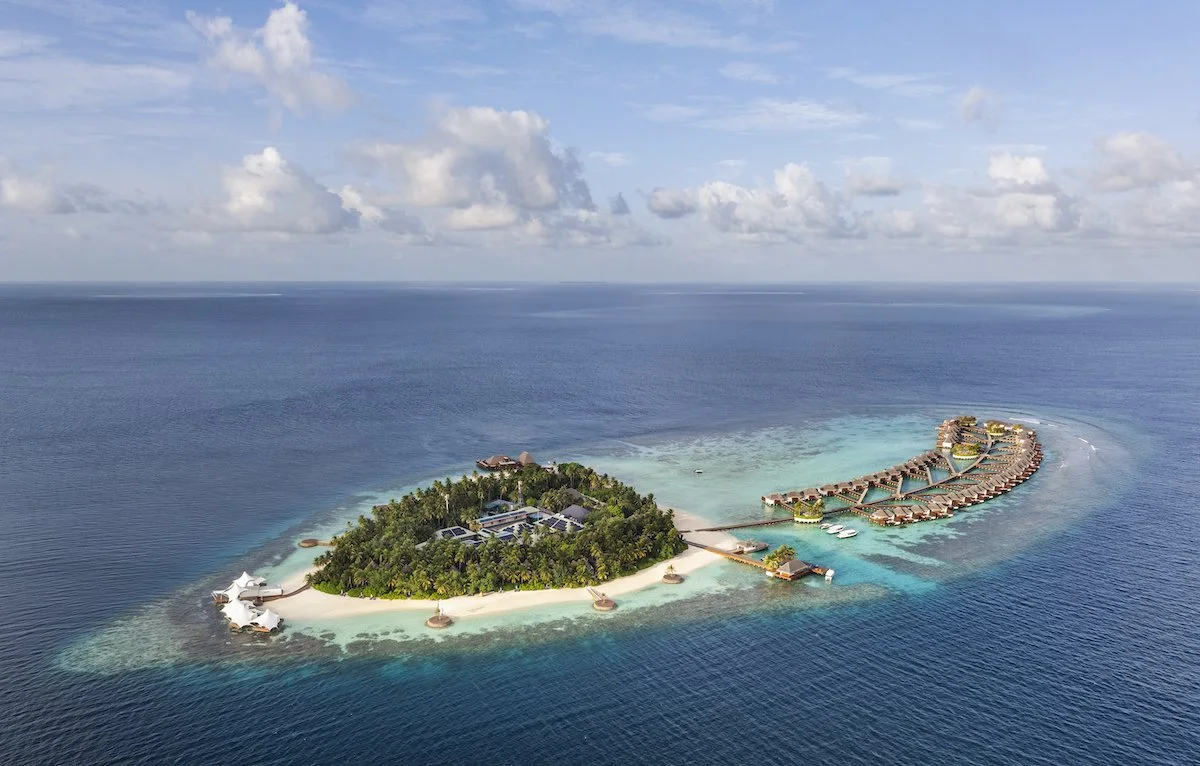
At W Maldives, sustainability initiatives include 647 solar panels generating 310 kW of renewable power, reducing the resort's reliance on fossil fuels. The resort is also addressing food waste through an onsite biogas plant. Half of the property's food waste is now mitigated through the system, which converts organic waste into methane for kitchen use while producing a nutrient-rich liquid that can fertilise island gardens.

Bandos Maldives
At Bandos Maldives, 1,330 solar panels produce 744.8 kWp of electricity and cover 30% of the property's daily electricity requirements. Green Globe reports that Bandos plans to expand the installation to 1,698 panels and 1,063.52 kWp.
The Nautilus Maldives provides another example. The resort installed 704 solar panels in 2024, generating approximately 430,000 kWh of renewable electricity annually. Its wider energy approach incorporates passive cooling, LED lighting, smart climate-control systems and monitoring of greenhouse-gas emissions.
These initiatives are particularly relevant to an island tourism industry where reducing dependence on fossil fuels and imported resources offers both environmental and operational benefits.
Protecting the marine environment
For Maldivian tourism, the health of the ocean is inseparable from the health of the destination.
W Maldives has expanded its marine conservation through its Sea of Stars program in collaboration with MARS Sustainable Solutions. Resort team members were trained in manufacturing and placing reef stars, and 400 reef stars were subsequently installed with the resort's resident marine biologist to support coral restoration.
At Bandos Maldives, employees have planted coral fragments on the resort's house reef, with Green Globe reporting approximately nine square metres of regenerated coral.
Pullman Maldives
The Nautilus, situated within the UNESCO Biosphere Reserve of Baa Atoll, operates a coral regeneration program led by a resident marine biologist. Guests can adopt coral frames placed in the lagoon and receive updates on their growth. The resort also follows the Manta Trust's Swim with Mantas Code of Conduct and is developing a coral nursery.
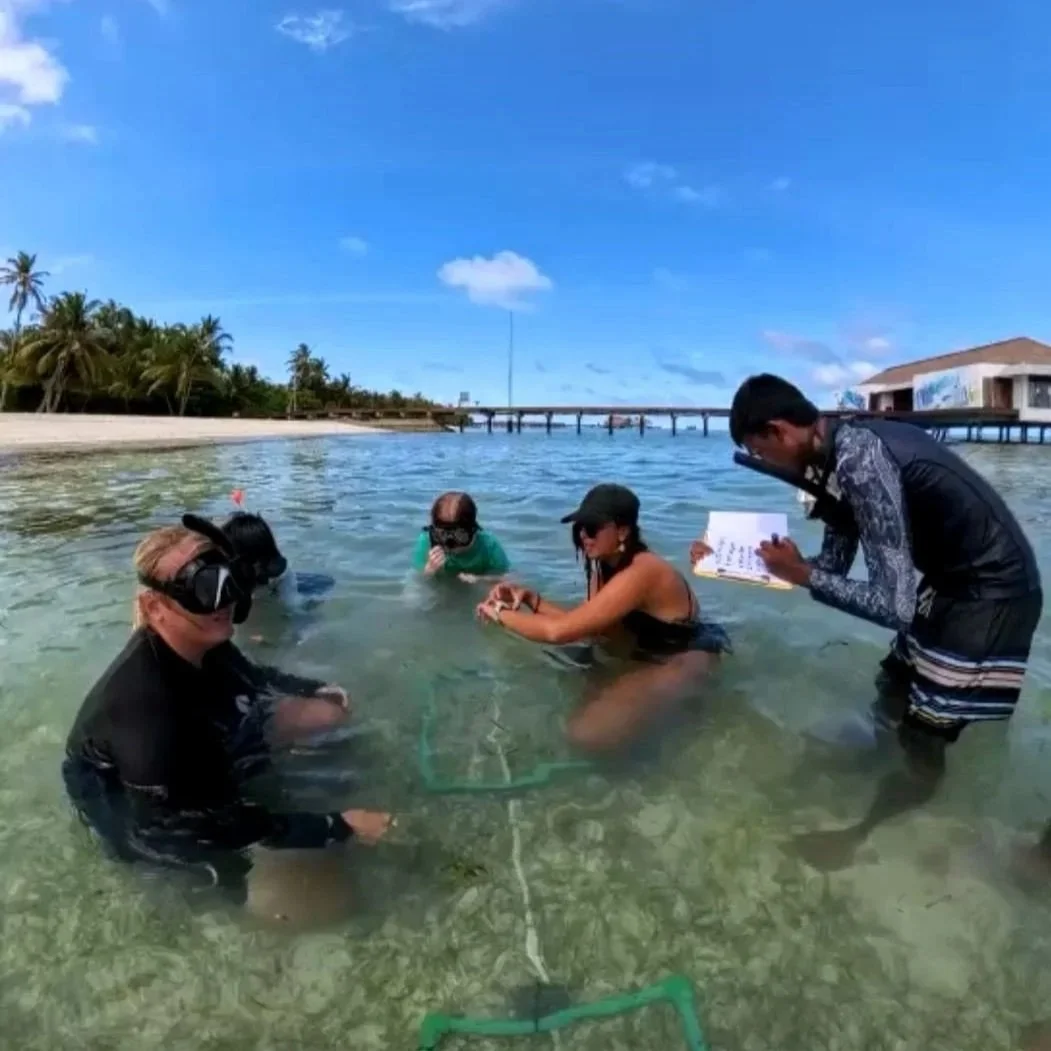
Pullman Maldives is taking another approach to marine stewardship by inviting guests to participate in its Sea Grass Mapping Project.
Together, such programs demonstrate how resorts can connect tourism experiences with protection and better understanding of the marine environments on which the Maldivian visitor economy depends.
Growing more and wasting less
Sustainable food production and greater island self-sufficiency are also emerging themes.
Bandos Maldives grows a limited supply of vegetables and herbs in its onsite garden, while W Maldives has expanded its planting of bananas, mangoes, papayas and other produce to support on-island supply and reduce dependence on imported produce.
The Standard, Maldives has strengthened its local supply chain by sourcing fresh fruit, vegetables, herbs and lettuce from Maldivian Mermaid, a local farm on a nearby island.

OZEN LIFE MAADHOO
Atmosphere Core is exploring further innovations across its Maldivian properties. Green Globe highlights a vertical hydroponic garden at OZEN LIFE MAADHOO, an in-house biogas installation at OBLU SELECT Sangeli, kitchen gardens across its resorts and paperless app-based booking and check-in systems.
These projects show that sustainability can extend beyond headline technologies such as solar panels. Food sourcing, organics management, digitisation and local production can all contribute to a more resource-conscious model of island hospitality.
Sustainability also means people and communities
The sustainability of Maldivian tourism reaches beyond resort boundaries.
Through the Atmosphere Foundation, Atmosphere Core has supported a range of community initiatives. The Foundation has built a training kitchen for students with special needs, conducted reading programs reaching 7,196 young people and supported health-screening programs for 590 senior citizens on local islands.
Its Bamboo for Climate Change Mitigation project has also donated more than 4,000 germinated seedlings and introduced bamboo saplings to 27 islands, alongside planting more than 1,000 seedlings at Atmosphere Core resorts.
This social dimension is important. Sustainable tourism encompasses not only carbon, water, biodiversity and waste, but also the relationship between tourism enterprises, employees and the communities around them.
Preserving the islands themselves
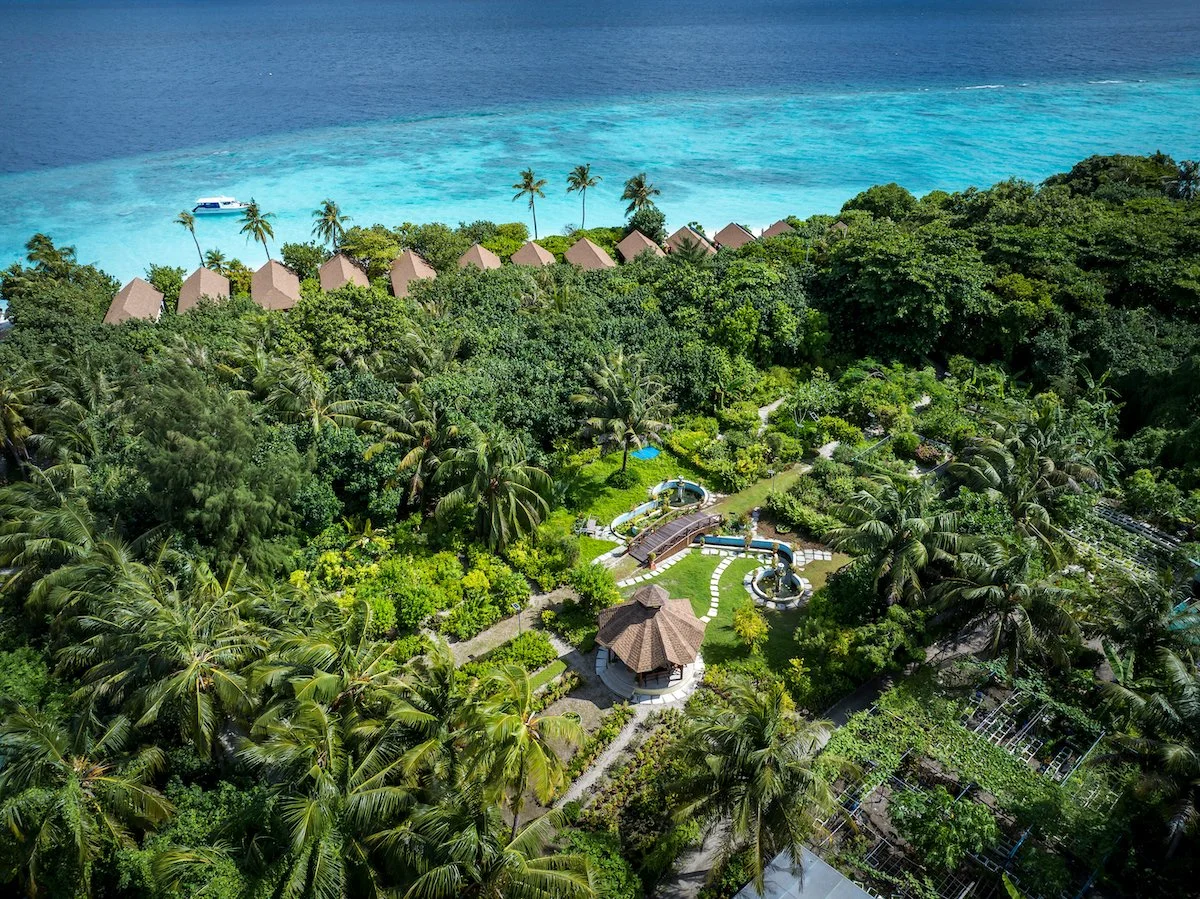
At Reethi Faru Resort, environmental protection starts with the island's landscape. More than 1,160 palm trees and native vegetation have been preserved. During development, existing trees were relocated rather than removed, helping minimise disruption to the natural ecosystem and retain the island's tropical character and biodiversity.
Reethi Faru Resort
The Nautilus has meanwhile planted more than 20,000 indigenous dhun'gethi bushes, creating the Indian Ocean's largest green wall. The planting helps naturally cool the island, reduce heat absorption and support biodiversity.
Such initiatives reinforce an important principle for island tourism: the natural environment is not simply the backdrop to the visitor experience. It is a fundamental tourism asset that requires active stewardship.
Certification provides validation
The scale of Green Globe's presence illustrates how widely structured sustainability management is becoming embedded in Maldivian tourism.
The individual achievements are diverse, from renewable-energy installations and biogas systems to coral restoration, local farming, marine conservation and community investment. What connects these activities is an effort to translate sustainability commitments into tangible actions.
For one of the world's most climate-vulnerable tourism destinations, that is particularly significant. The Maldives is demonstrating that luxury tourism and environmental responsibility need not be opposing ambitions.
Green Globe Certification is increasingly being used by the Maldivian tourism industry to independently validate and give structure to these sustainability efforts, providing a recognised framework through which resorts can demonstrate their commitment to more responsible tourism. Visit the the complete list of Green Globe member hotels & resorts in the Maldives.